
Keeping your air conditioner clean can improve airflow, cooling efficiency, and indoor air quality. But with countless cleaning products and techniques available, choosing safe and effective options can be confusing. This article highlights practical methods, recommended product types, and important precautions to help you clean your system properly.
Read on to learn about smarter ways to approach AC cleaning without risking damage to your unit.
Choose a gentle cleaning solution
Harsh chemicals can damage coils, plastic parts, rubber seals, and protective coatings. A mild coil cleaner or a solution made for air conditioning units offers a safer choice. Always follow the product label and use the correct dilution. Household bleach and strong solvents can cause corrosion, so keep them away from AC components.
Start with the air filter
The filter collects dust before air moves into the indoor unit. Remove it and check the surface for heavy buildup. Wash washable filters with clean water and mild soap. Let the filter dry fully before placing it back. Replace disposable filters according to the manufacturer’s instructions. A clean filter supports smooth airflow and helps the system work with less strain.
Clean coils with care
Coils collect fine dust and grime that reduce heat transfer. Use a soft brush, low-pressure air, or an approved coil cleaner to remove buildup. Work gently around the fins because they bend easily. A fin comb helps straighten damaged sections and improves airflow across the coil surface.
Keep fins and vents clear
Dust settles around vents and fins as indoor air moves around the room. A soft brush or microfiber cloth removes loose dirt without scratching surfaces. For deeper grime, use a lightly damp cloth with mild soap. Avoid soaking electrical parts, control panels, and wiring.
Protect electrical components
Safety starts with switching off the AC and disconnecting its power supply before cleaning. Keep water away from motors, circuit boards, switches, and electrical connections. A spray bottle should never send liquid directly toward these areas. Use a damp cloth for nearby surfaces and allow everything to dry before restoring power.
Finish with a simple inspection
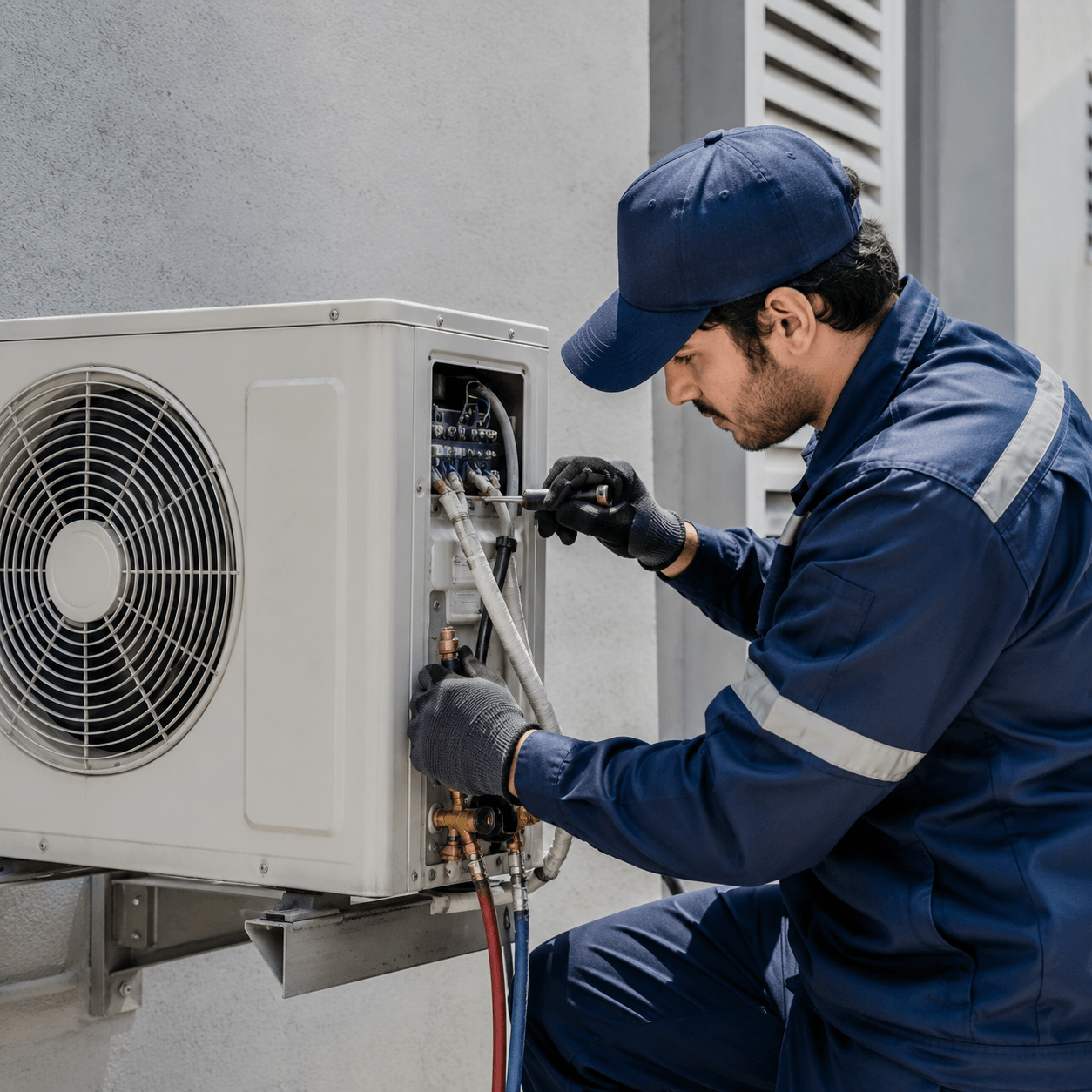
After cleaning, check the filter, vents, drain line, fins, and visible wiring. Look for unusual moisture, damaged insulation, blocked drainage, or loose parts. If dirt sits deep inside the system or an electrical issue appears, contact a trained AC technician. Professional service gives the unit a deeper clean while reducing the risk of accidental damage.